Testimonials
Kalaniyot at Columbia will start hosting Postdoctoral Fellows and Sabbatical Scholars in Summer/Fall 2026. Below, we share testimonials from current and former Postdoctoral Fellows about their experience at Columbia.
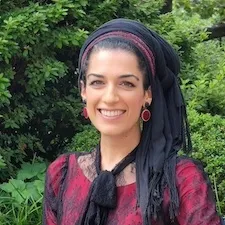
Dr. Natalie Fardian-Melamed, Postdoc in Applied Physics & Materials Science, Columbia
I completed my PhD in physical chemistry at the Hebrew University in 2020 and joined Columbia University in 2021 as a Fulbright Scholar and Zuckerman STEM Leadership Scholar. During my postdoctoral research at Columbia, supported by prestigious fellowships including the Marie Sklodowska-Curie Individual Global Fellowship, ISEF International Fellowship, and Weizmann Postdoctoral Career in Science Award, I have focused on designing and investigating novel nanoscale optical sensing platforms for the remote detection of deeply-subsurface mechanical forces in diverse technological and physiological systems.
Columbia's inherently collaborative environment has been transformative for my scientific career. The university's culture of interdisciplinary cooperation has tremendously expanded my collaborative and collegial network, leading to breakthrough research outcomes. This supportive atmosphere has enabled me to publish several high-impact papers in Nature and present my work at prestigious international platforms, from the Lindau Nobel Laureate Meeting to leading conferences and topical seminars worldwide. The state-of-the-art facilities, world-class mentorship, and Columbia's commitment to pushing scientific boundaries have provided the ideal foundation for my research in nanoscale optical sensing. As I prepare to establish my own academic laboratory, I plan to lead a diverse and passionate research group to boldly explore and advance new frontiers in science through visionary research, innovation, collaboration, and scholarship—tackling global challenges in human health, information technology, and sustainable energy. I can confidently say that my Columbia experience has been instrumental in shaping this vision for groundbreaking scientific innovations. I highly recommend Columbia to any researcher seeking an environment where cutting-edge science thrives through collaboration and excellence.
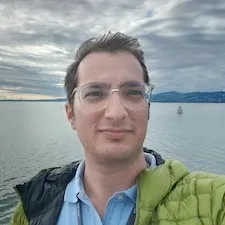
Dr. Elad Arad, Postdoc in Chemical Engineering, Columbia
I joined Columbia University’s Department of Chemical Engineering in April 2023 as a postdoctoral researcher in the Gang Lab, after completing all my studies in chemistry at Ben-Gurion University. Coming here with the support of EMBO and Rothschild fellowships has been a transformative experience, both scientifically and personally. My research relies on Columbia’s state-of-the-art core facilities and the synchrotron at Brookhaven National Laboratory, which together open possibilities I could only dream of before — from probing DNA-based nanomaterials at the highest resolution to building collaborations across disciplines. Living through the recent demonstrations on campus gave me a unique perspective: even in moments of debate and tension, the university remains a leading institution with a strong reputation and provides wide-ranging research opportunities. For me, the balance of openness and excellence is what makes Columbia’s environment so special — one that I believe Israeli postdocs can both benefit from and contribute to in meaningful ways. Looking ahead, I aim to return to Israel and apply for a faculty position, bringing back the knowledge, skills, and collaborations I have gained here.
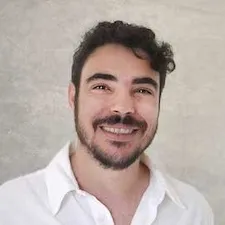
Prof. Ameer Marzok, Areospace Engineering, Technion
I joined Columbia University in August 2022 as a Postdoctoral Research Scientist in the Department of Civil Engineering and Engineering Mechanics, under the supervision of Prof. Haim Waisman. Before that, I completed all my studies at the Faculty of Civil and Environmental Engineering at the Technion – Israel Institute of Technology, focusing on structural optimization and computational mechanics.
My research at Columbia focused on the analysis and optimization of thin-walled structures, considering various failure criteria. Funded by industry, this research yielded both scientific and practical contributions, leading to several publications in leading journals in the field.
During my time at Columbia, I gained valuable experience in state-of-the-art topics that prepared me to be an independent researcher and faculty member. In addition to the scientific knowledge, I built connections with leading scientists in the field by traveling to conferences and attending faculty seminars. Socially, Columbia University offers a vibrant community with happy hours, activities, and holiday events.
The Columbia campus is very hospitable, home to a diverse community of people from different regions connected in harmony. Even when the global situation was tense and there were demonstrations on campus, it still felt safe, which is an important consideration for future Israeli postdocs.
I have returned to Israel as an Assistant Professor in the Faculty of Aerospace Engineering at the Technion. My research focuses on structural optimization and computational solid mechanics. I am also continuing my collaboration with my former group at Columbia through ongoing research.
Prof. David Hay, Computer Science, Hebrew University of Jerusalem
My academic journey began at the Technion – Israel Institute of Technology, where I earned my Ph.D. in Computer Science in 2007. After a first postdoctoral fellowship at Politecnico di Torino, I continued to Columbia University in 2009–2010 as a Postdoctoral Research Scientist in the Department of Electrical Engineering, under the supervision of Prof. Gil Zussman.
At Columbia, my research focused on the resilience of communication networks and power grids to geographically correlated attacks — a subject that combined both theoretical insights and practical implications. The postdoc was a pivotal stage in my career, allowing me to explore new directions, establish collaborations that remain active to this day, and gain experience in grant writing, which later helped me develop my independent research program.
Columbia also offered an engaging and supportive academic environment. Between seminars, discussions with colleagues, and the wider community on campus, it provided both professional and personal growth. Looking back, I see my time at Columbia as one of the most important periods of my career.
In 2010, I joined the Hebrew University of Jerusalem, where I am now a Professor of Computer Science. My research continues to focus broadly on computer networking, and many of the directions initiated during my postdoc at Columbia still influence my work. In 2011, together with Prof. Zussman and collaborators from MIT, Bar-Ilan University, and the Technion, I was awarded a BSF grant on the resilience of networks. More recently, I am heading a research center as part of VATAT’s Flagship Program for Research Centers in Energy, in collaboration with colleagues from HUJI, the Technion, and Bar-Ilan University. This center is dedicated to the resilience of power grids, focusing on mitigating multilayer threats to energy networks — from physical and cyber-attacks to market manipulation. I am currently on sabbatical at Princeton University, where I am engaged in further research in computer networking and related areas.